%20--%3e%3csvg%20version='1.1'%20id='Layer_1'%20xmlns='http://www.w3.org/2000/svg'%20xmlns:xlink='http://www.w3.org/1999/xlink'%20x='0px'%20y='0px'%20viewBox='0%200%20236.2%20238.3'%20style='enable-background:new%200%200%20236.2%20238.3;'%20xml:space='preserve'%3e%3cstyle%20type='text/css'%3e%20.st0{fill:%23FFFFFF;}%20.st1{fill:%23678983;}%20.st2{fill:%2395C4BC;}%20%3c/style%3e%3cpath%20class='st0'%20d='M236,124.2c-0.1-0.2-0.2-0.4-0.4-0.5L236,124.2L236,124.2z'/%3e%3cpath%20class='st1'%20d='M208.3,93c0.7-0.8,1.8-1.1,2.8-1c3.1,0.4,6,1.5,8.6,3.1c2.6,1.5,4.9,3.4,6.9,5.7c1.8,2.1,2.6,3.8,2.5,5%20c-0.1,0.9-0.4,1.7-0.8,2.5c-0.4,0.8-0.9,1.1-1.5,1c-0.7-0.1-1.4-0.4-2.1-0.8c-0.3-0.2-1.2-0.6-2.6-1.4c-1.7-0.9-3.5-1.6-5.3-2.1%20c-2.3-0.7-4.7-1.2-7.2-1.5c-2.4-0.3-3.4-2.1-3-5.4l0.2-1.6C206.9,95.3,207.4,94,208.3,93z'/%3e%3cpath%20class='st2'%20d='M176.6,117.4c-1.7,0.9-3.9,0.3-4.8-1.4c-0.9-1.7-0.3-3.9,1.4-4.8c0,0,0.1-0.1,0.1-0.1%20c6.8-3.5,14.3-5.7,21.9-6.4l6.5-41.1c0.9-5.5,1.7-11.2,0.9-16.7c-0.8-5.6-3.6-11.1-8.6-13.8c-4.9-2.7-10.9-2.2-15.8,0.1%20s-8.9,6.4-12.2,10.8c-20,26.3-19.4,48.4-28.4,94.2h-5.2c0-0.3,0.1-0.6,0.1-0.9l13.1-81.7c1.1-6.7,2.1-13.5,0.9-20.1%20c-1.2-6.6-5.2-13.2-11.5-15.6c-5.7-2.2-12.4-0.6-17.4,3s-8.7,8.7-11.7,14C99.3,48.2,95,60.6,91.8,73.4c0.2-22.7-4.4-40.6-13.8-53.5%20C70.3,9.2,58.5,2.1,45.4,0.4h-0.3C24.5-2.4,5.6,12.1,2.8,32.8s11.7,39.6,32.4,42.3c18.1,2.4,35.4-8.5,40.9-26%20c-0.5-2.1-1.2-4.3-2-6.3c-4.6-11.7-13.8-21.1-25.3-26c-1.8-0.8-2.6-3-1.7-4.7c0.8-1.7,2.8-2.5,4.5-1.8c19,8.1,30.8,25.9,32.7,46.2%20c1.4,14.8,0,30.4-2.1,45c-1.1,7.6-2.6,15.1-4.3,22.6c-0.4,2-6.1,21.7-5.6,22c3.5,1.9,6.9,4.1,10.1,6.6c1.6,1.2,1.8,3.5,0.6,5%20c-1.2,1.6-3.5,1.8-5,0.6l0,0c-23.6-18.3-49.2-15.5-66.9,7.2c-17.4,22.4-14,54.5,7.7,72.8l55.3-20.7c0.6-0.4,1.2-0.9,1.7-1.3%20c5.4-4.8,6.9-12.5,8.1-19.7l17.1-103c0.4-2.2,0.8-4.5,2.2-6.2c1.4-1.7,4.1-2.6,5.9-1.3c1.8,1.3,1.7,4.1,1.4,6.4L95.2,209%20c12.7-3.9,25.2-8.2,37.5-13c3.4-1.3,6.8-2.7,9.3-5.4c3-3.3,3.9-8,4.7-12.4l14.4-83.1c0.2-1.9,0.8-3.8,1.9-5.4%20c1.2-1.5,3.5-2.3,5.1-1.3c1.8,1.2,1.7,3.8,1.5,6l-7.7,60.9c-0.8,6.7-1.7,13.6-0.3,20.2c1.2,5.4,4.1,10.6,8.6,13.6%20c1,0.7,2.2,1.3,3.4,1.7c7.1,2.5,14.9-0.5,21.3-4.4c21.8-13.2,36.9-35.2,41.3-60.3c0-0.2,0.1-0.3,0.1-0.5%20C220.1,110.6,196.2,107.2,176.6,117.4z'/%3e%3c/svg%3e)
Client
My Shopping / Journeys | Microsoft Shopping
Role
Mid-level designer partnering with a principal designer
Timeline
2024
Platform
Browser / Copilot / Microsoft ecosystem
Designing a calmer shopping hub around real user journeys
Platform Scope
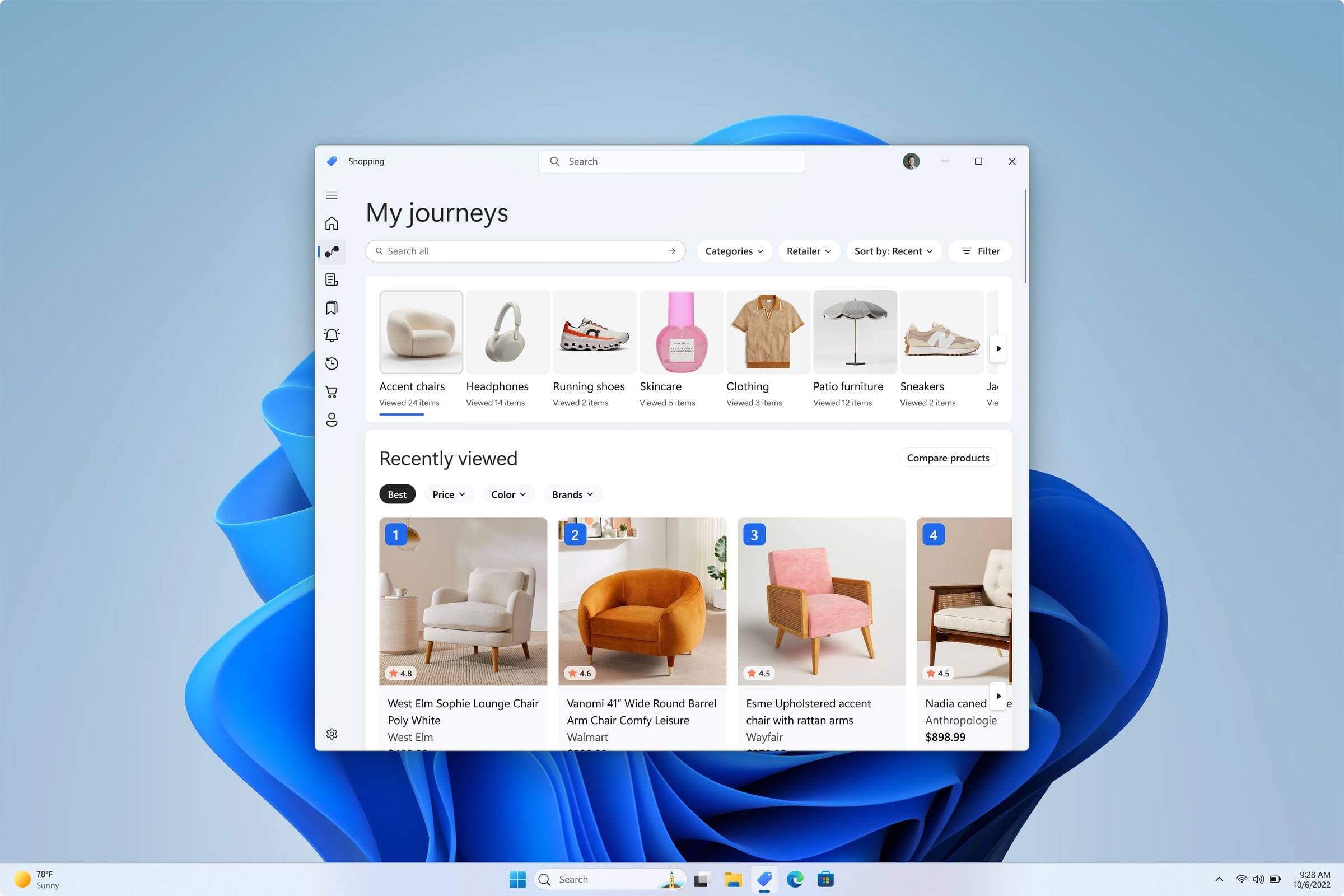
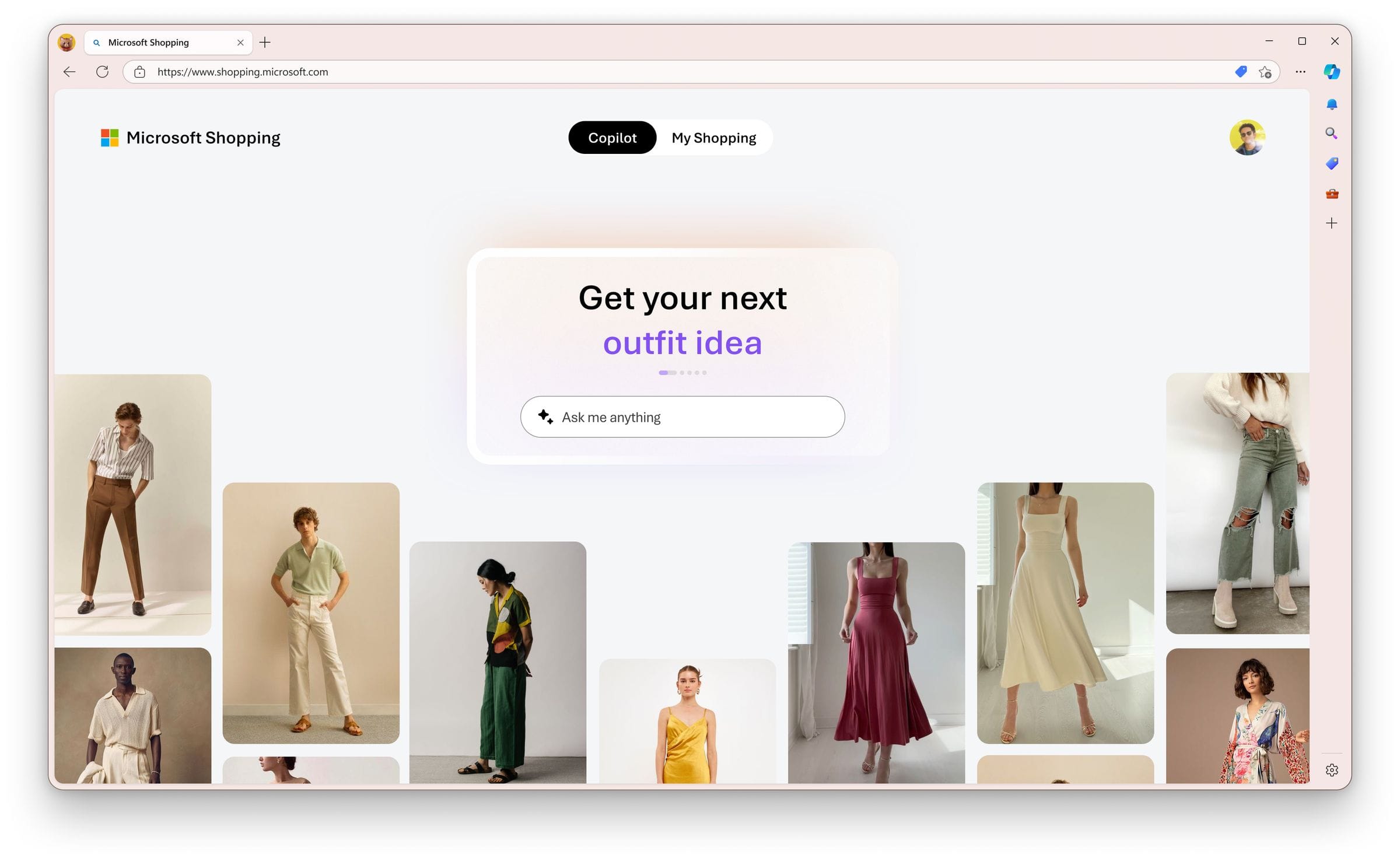
These explorations cover two distinct surfaces: a standalone shopping app developed outside Microsoft's existing product canvases, and a Journeys hub embedded natively within Bing. Despite different deployment contexts, both were designed around the same premise, surfacing the right shopping intelligence at the right moment in a user's journey.
Problem
Online shopping involves multiple steps, platforms, and mental load. Users struggle to track their activity across products, retailers, and categories, and often feel uncertain about purchases, price drops, deals, and product discovery. The challenge was to create a central hub that simplifies shopping, helps users save money, and surfaces insights tailored to where they are in the journey.
Role & Collaboration
I collaborated with a principal designer as a mid-level designer on this project. My work included designing three user flow scenarios, interaction models, and feed-based versus static hub layouts. I worked closely with PMs, engineers, and researchers to prototype and iterate while keeping the experience calm, visually clear, and practical.
Approach & Features
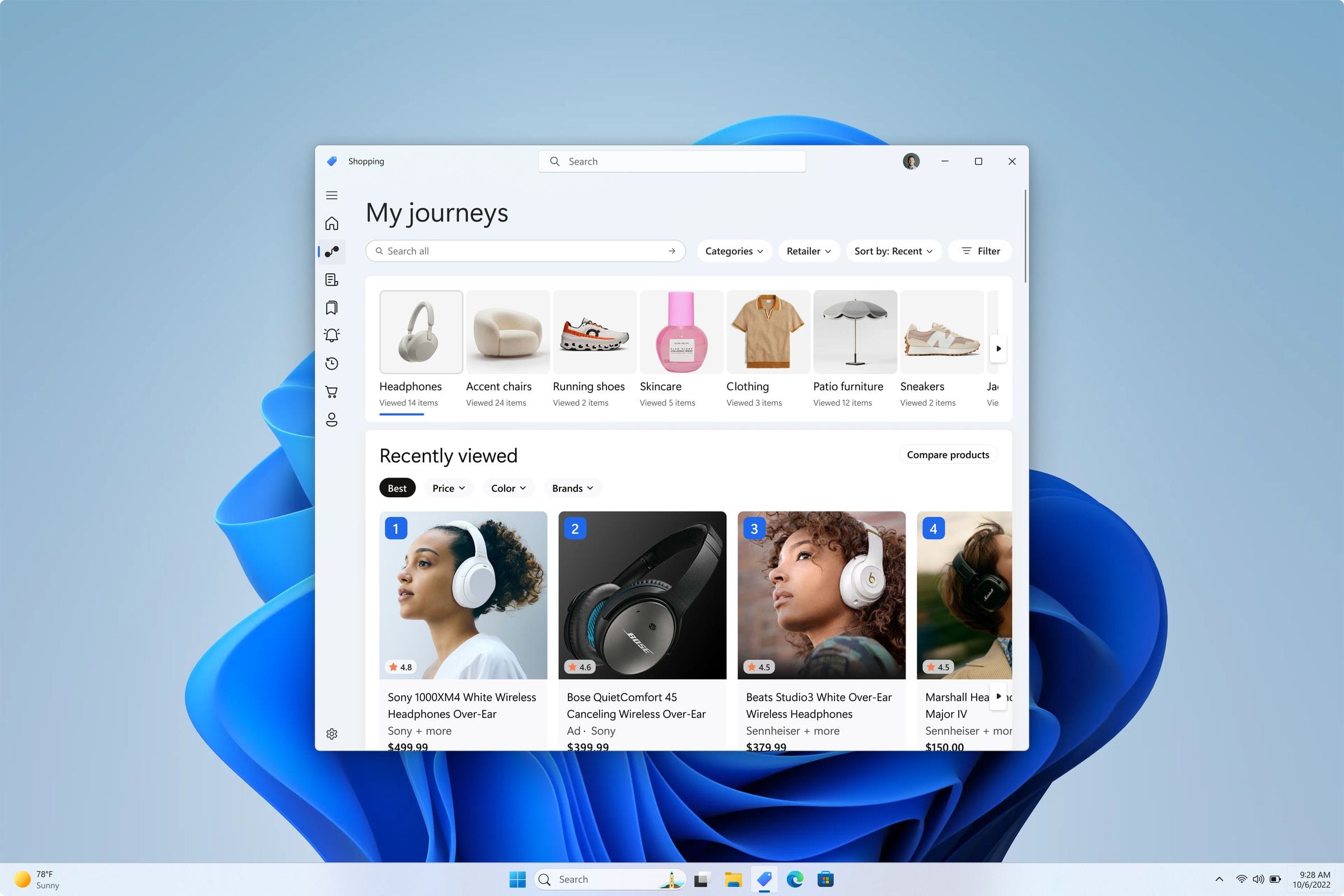
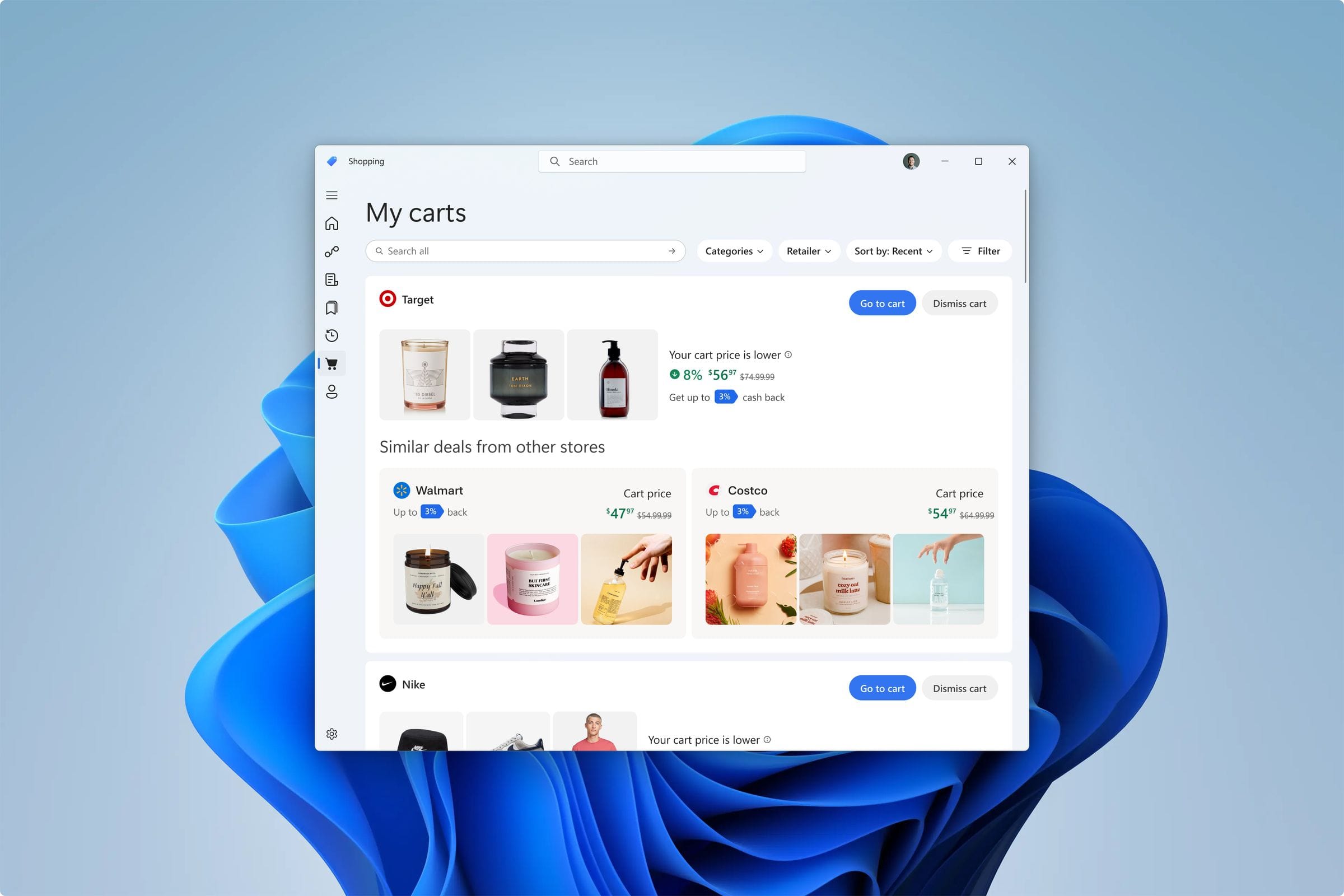
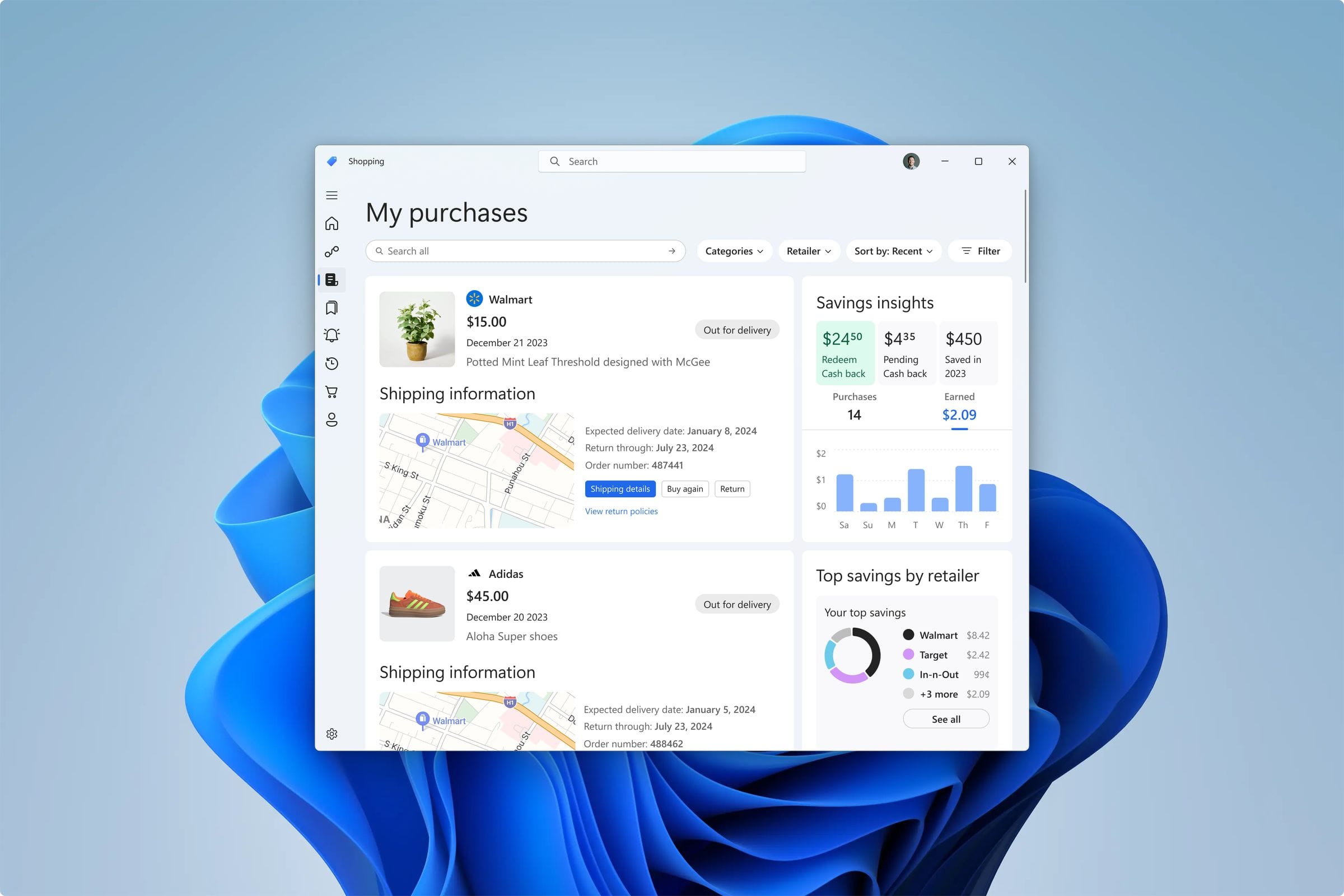
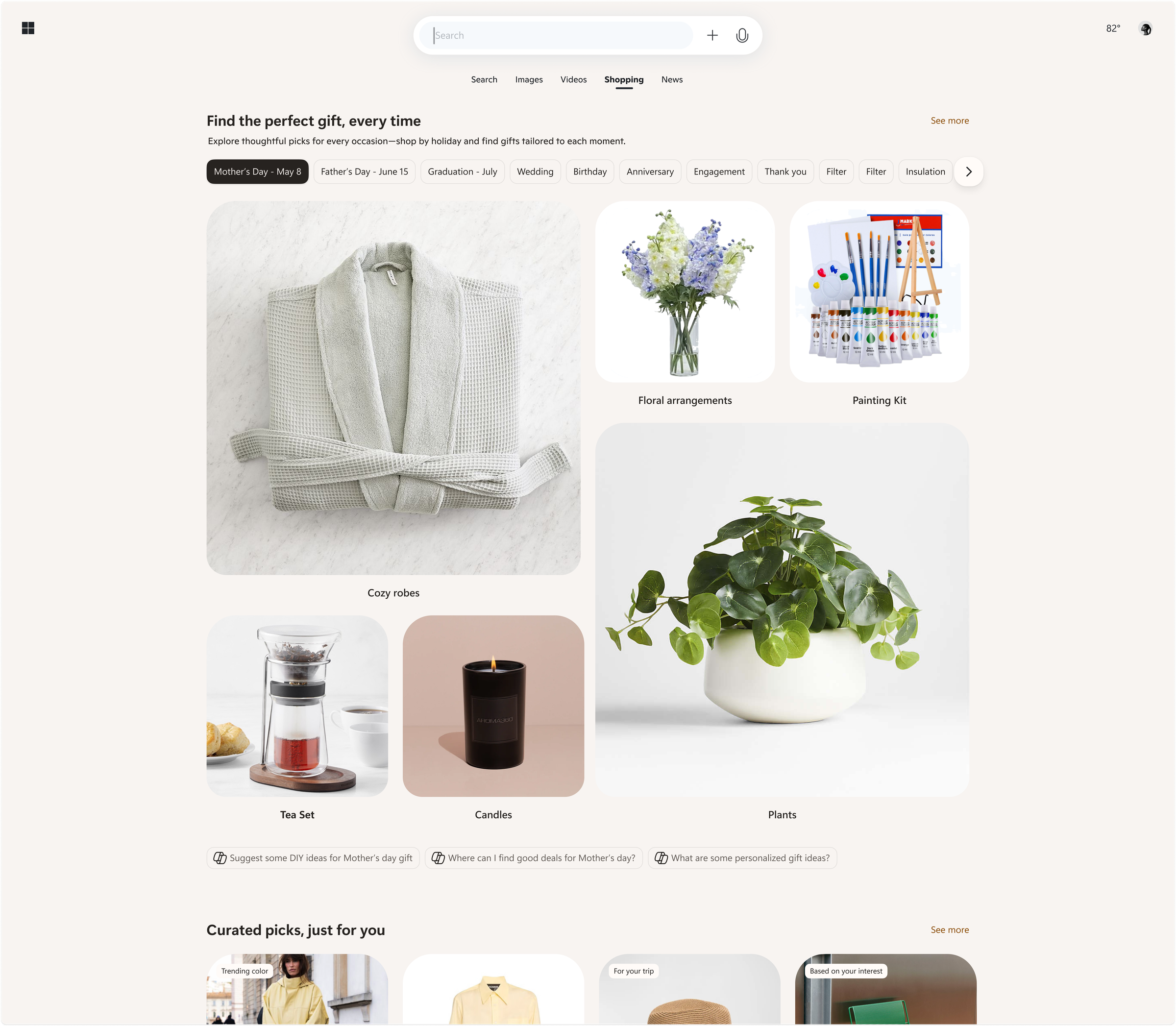
We defined three journey stages. Early focused on discovery with highlights from recent activity, curated recommendations, insights on new brands or categories, recently viewed products, and buying guides. Mid focused on narrowing choices with price drops, top options with reasoning, product comparisons, tracked items, and store recommendations. Late and post-purchase focused on package tracking, pending cashback, complementary recommendations, Copilot prompts, and routine guides.
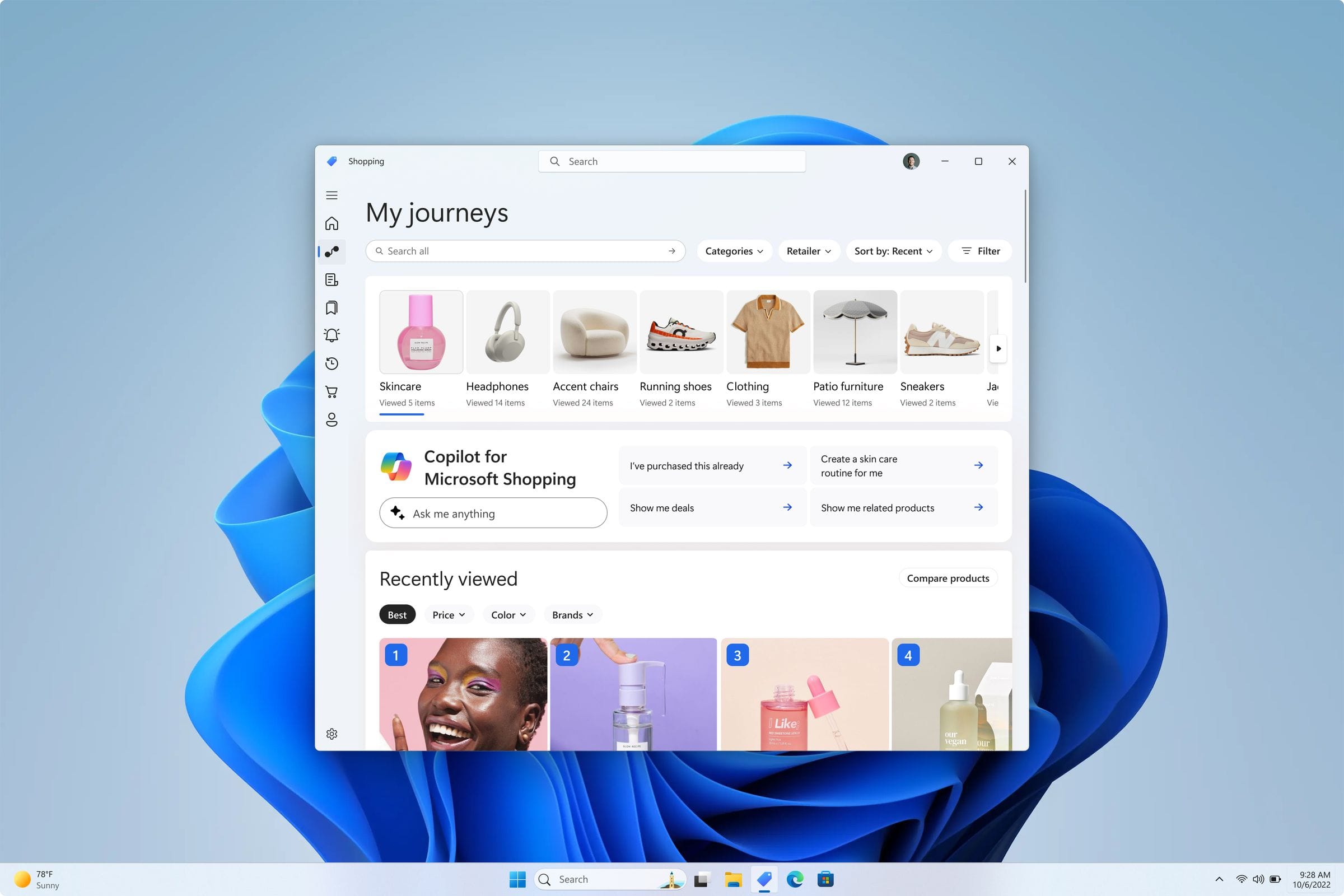
Key features I designed included activity summaries, recommendations with filters, insights modules, recently viewed items, buying guides, cashback and deals integration, and Copilot-powered chat prompts for follow-up questions. Feed-based layouts helped disperse dense information into a format that felt more digestible and easier to trust.
The work explored how a browser can surface holistic shopping intelligence that retailers alone cannot provide.
Journey Stages
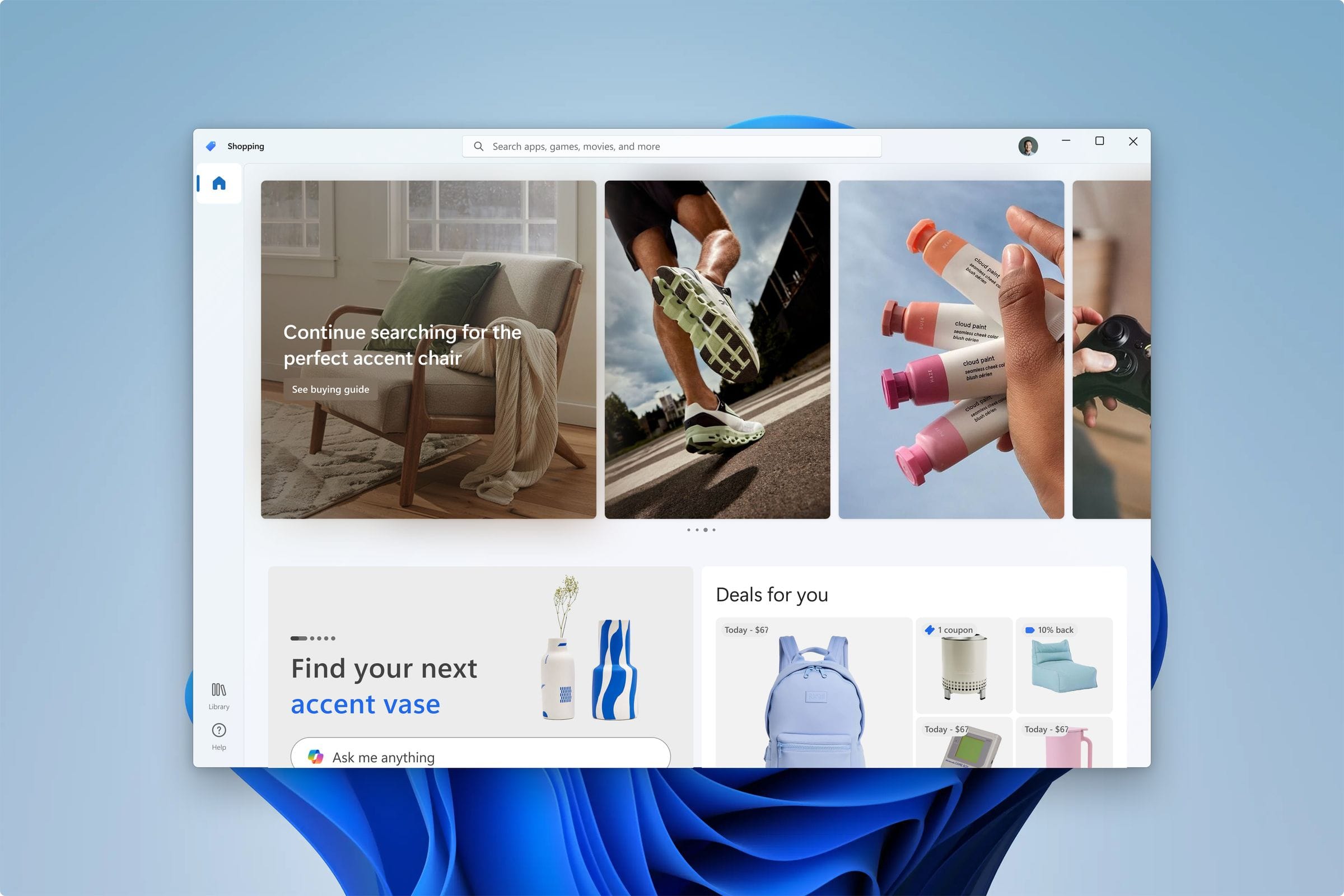
Journeys was structured around changing user intent. The system shifts from exploration and inspiration, to comparison and confidence-building, to post-purchase tracking and support. That framing made it possible to prioritize the right content at the right moment instead of treating shopping like one generic feed.
Early Journey: Open-Ended Discovery
Before a user has a clear intent, the system surfaces wide inspiration. Category browsing, trending products, and context-aware recommendations invite exploration without pushing toward a specific decision. The layout is generous and unhurried, giving users room to browse before they know what they want.
Mid Journey: Decision Support
Once a user signals interest in a specific product, the surface shifts to comparison tools, price tracking, and retailer options. The goal is confidence, not volume. Tracked products surface relevant price changes, and side-by-side options reduce the need to open multiple tabs.
Post-Purchase: Closing the Loop
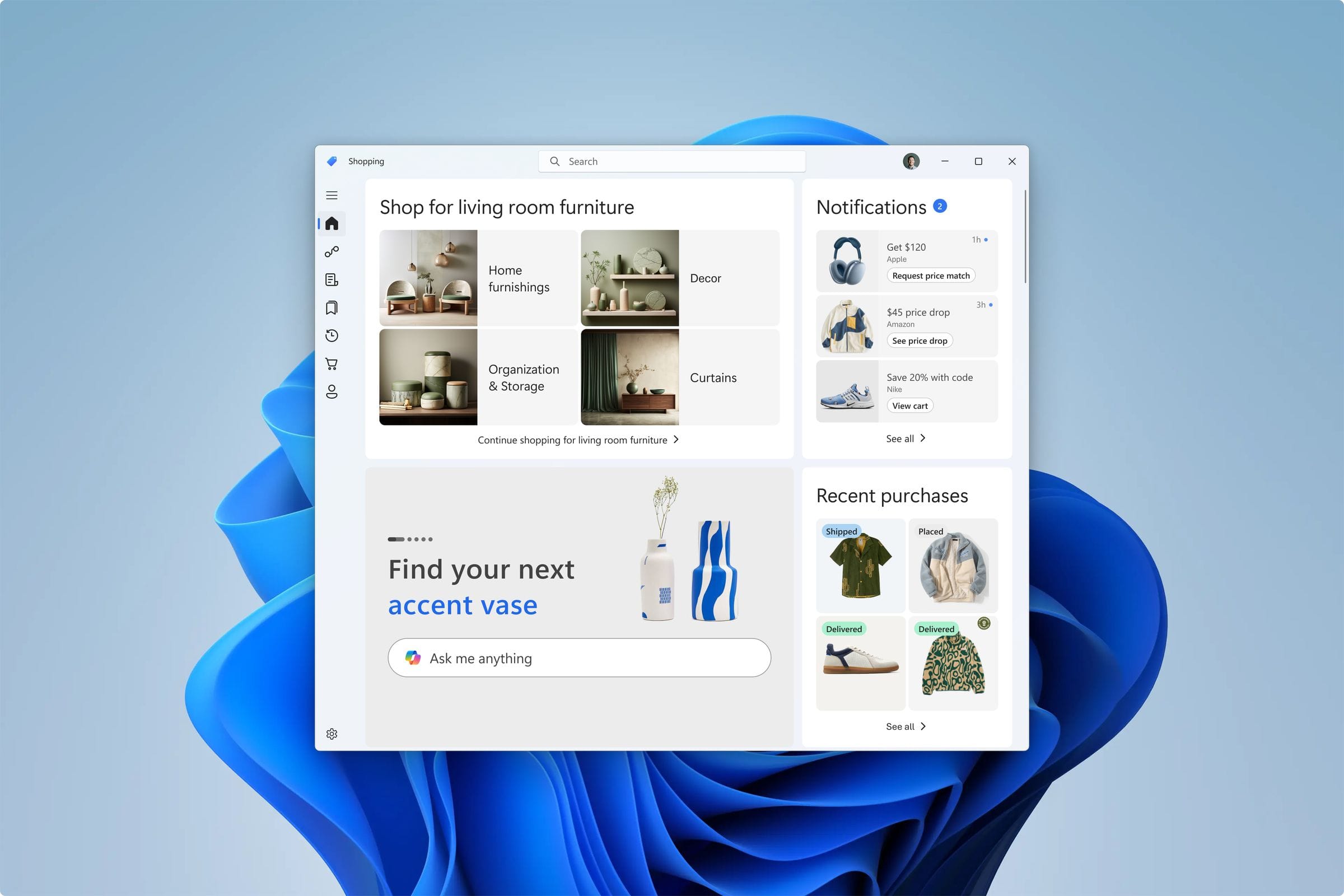
After checkout, Journeys stays relevant with order tracking, cash back status, and complementary product suggestions. The session remains alive beyond the transaction, keeping the user engaged with guides and product pairings that feel like natural follow-through rather than upselling.
Feed-Based Clarity
A core design decision was testing feed-based layouts against more static hub models. The feed approach made recommendations, insights, tracked products, and follow-up prompts feel visually dispersed and easier to scan, which helped balance information density with clarity and reduced the sense of promotional overload.
Outcome
The project was never flighted in Bing, but it informed the Journeys flows that later shipped in Microsoft Copilot. The work reinforced a broader product lesson: meaningful shopping assistance comes from combining content, context, and AI-driven insights in ways that do not look or behave like traditional retail surfaces.
My projects
Microsoft
Shopping ecosystem across Bing, Copilot, Windows, Outlook

Seagate
Licensed gaming launches and cloud storage communication

Varfaj Partners
UX/UI, branding, and art direction across an agency roster
Giga
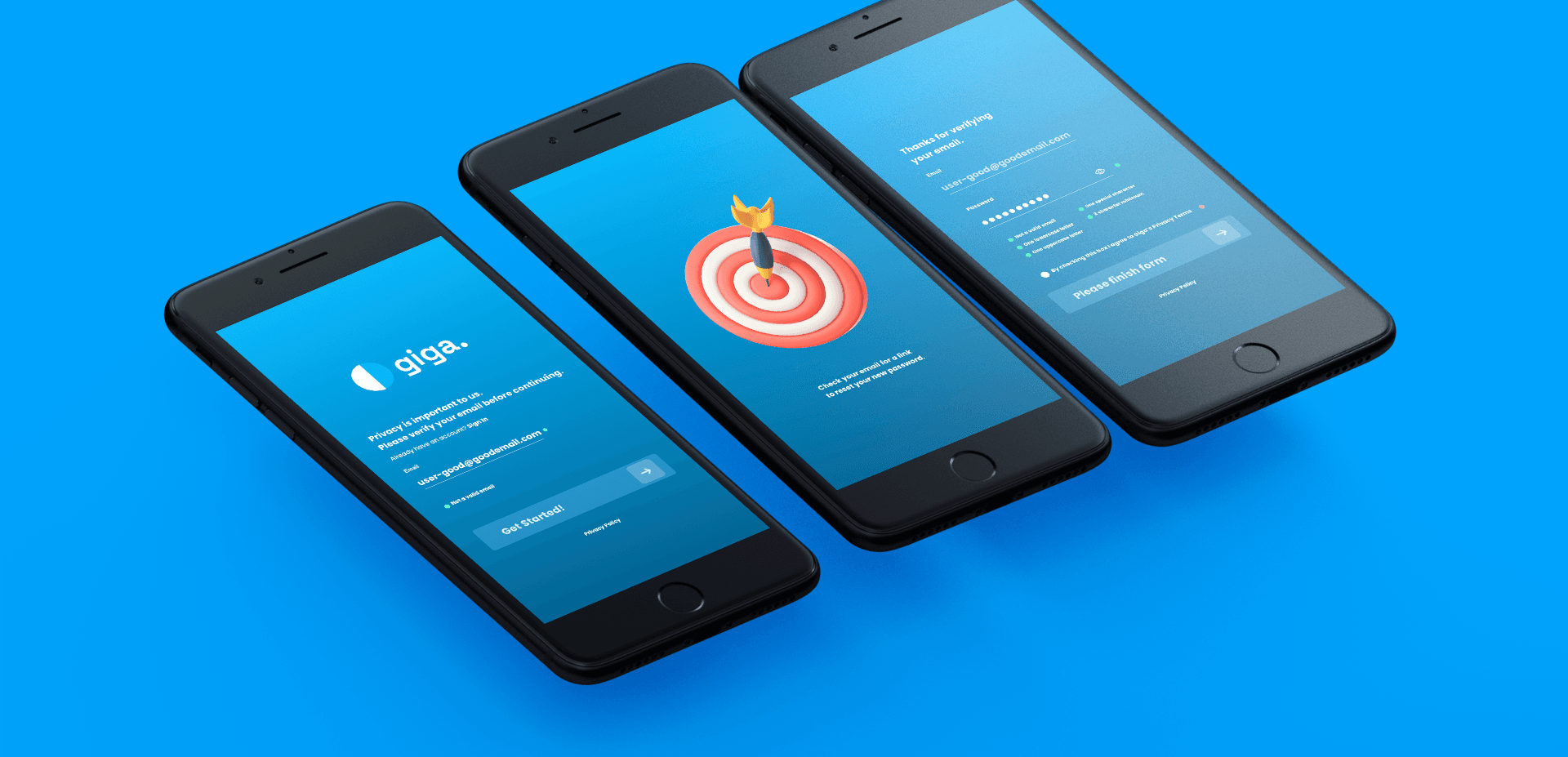
Full web app design for an evolving AI-native platform
Piton
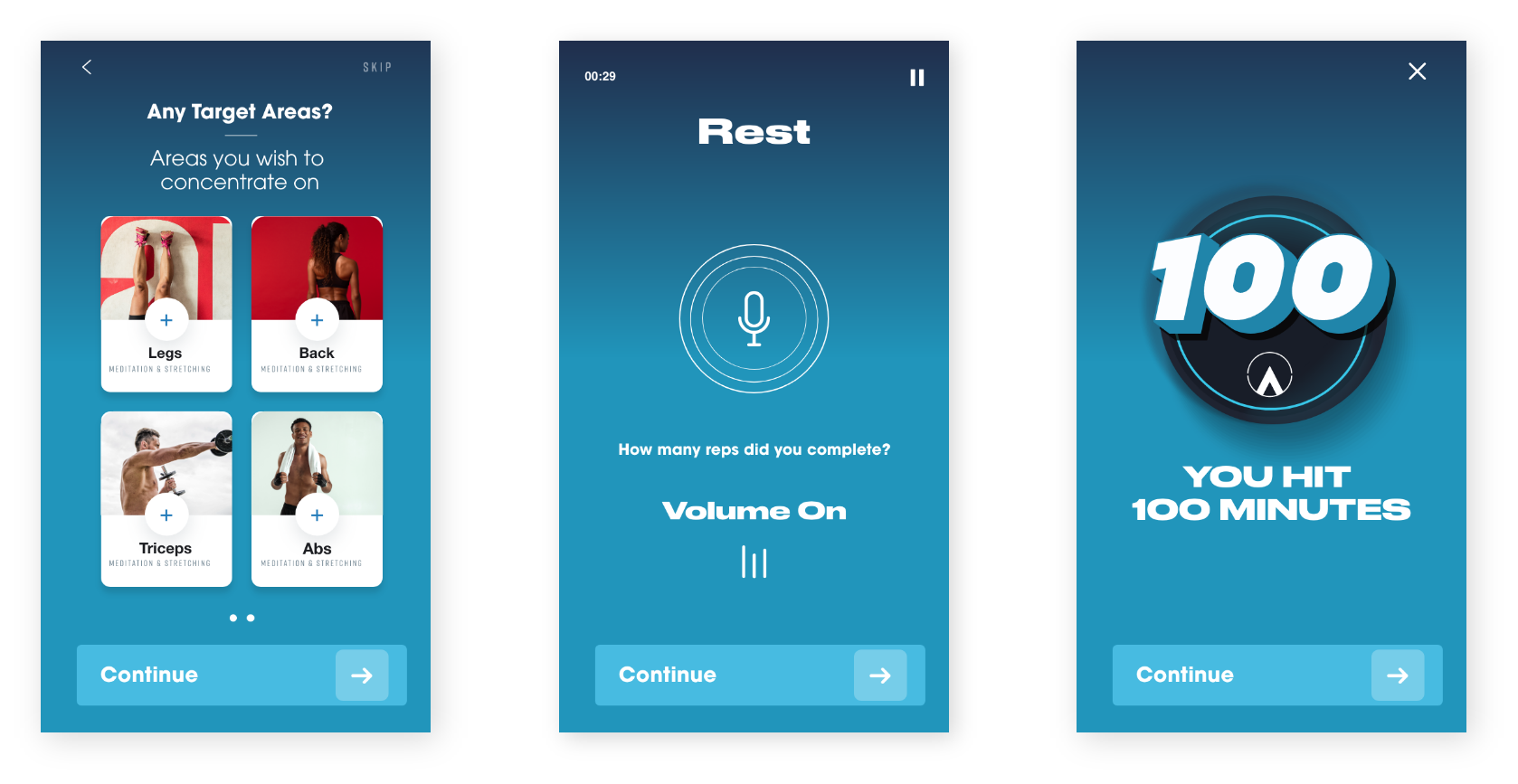
Voice-first iOS workout app for an early-stage startup
Outsource
Brand systems and digital experiences across four businesses